

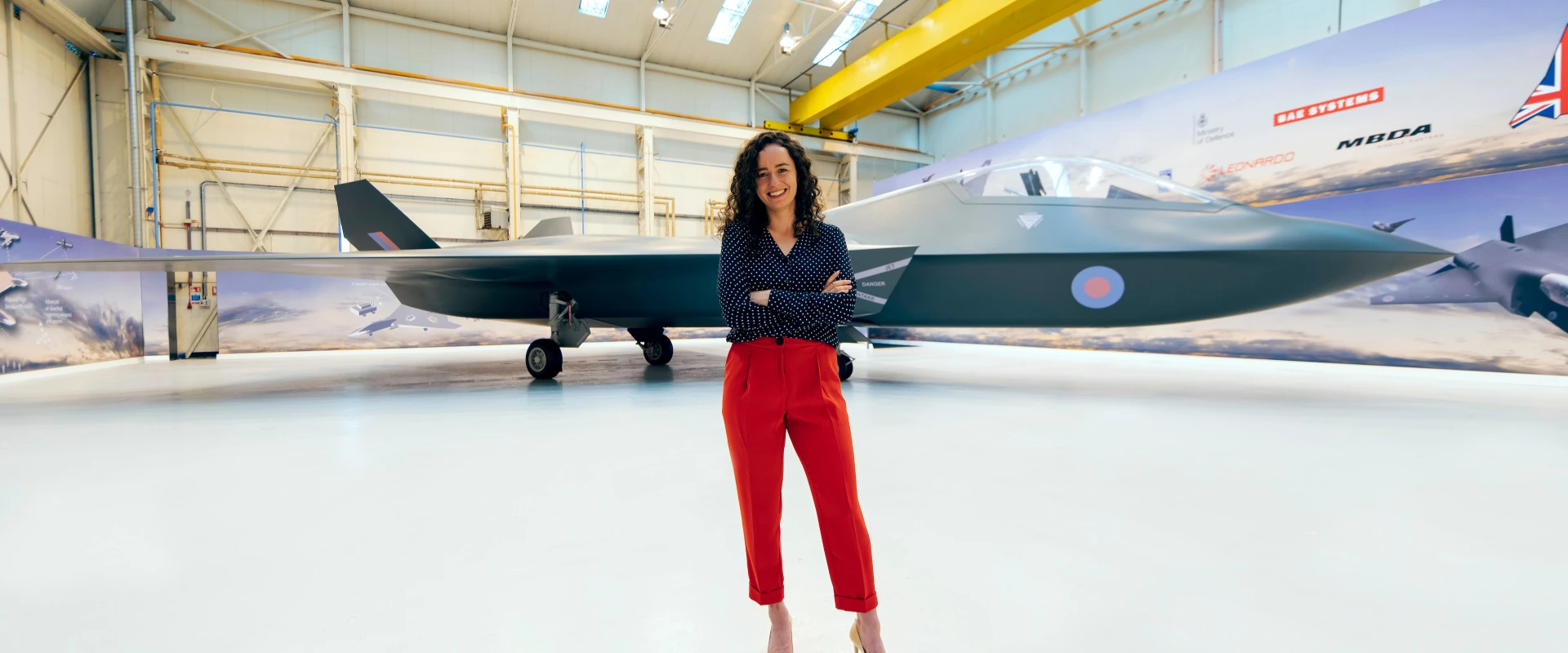
Aerospace Engineering BEng
Aerospace Engineering is a fascinating and challenging field that deals with the design, development, and manufacture of aircraft and spacecraft. This course will provide you with a comprehensive understanding of the fundamental principles, technologies, and methodologies used in aerospace engineering.
From learning about the aerodynamics of flight to exploring the complexities of space missions, you will delve into the diverse aspects of this field and gain hands-on experience through laboratory exercises, simulations, and projects. Whether you are interested in designing the next generation of supersonic jets, or planning and executing space missions, this course will provide you with the foundational knowledge and skills to achieve your goals. So, join us on this exciting journey as we explore the frontiers of Aerospace Engineering.
Aerospace Engineering is a field that deals with the design, development, and construction of air and space vehicles. This course provides students with a comprehensive overview of the principles and techniques used in aerospace engineering. The course covers topics such as aerodynamics, propulsion, structures, and control systems, as well as their applications in the design of aircraft and spacecraft.
The course will begin by introducing students to the fundamental concepts of aerodynamics, including the behaviour of fluids in motion and the principles of lift and drag. Students will learn how aerodynamics affects the performance and stability of aircraft, and how engineers design airfoils and wings to optimise flight characteristics.
The course will also cover the principles of propulsion, including internal combustion engines, turbojets, turbofans, turboprops, and rocket engines. Students will learn how these engines work and the various trade-offs involved in their design, such as efficiency, weight, and reliability.
Another important area of focus will be the design and analysis of aircraft and spacecraft structures. Students will learn about the different types of materials used in aerospace engineering, including metals, composites, and ceramics, and how these materials are used to construct lightweight, strong, and durable structures. Topics will also include stress analysis, fatigue, and fracture mechanics, as well as how to design for safe and reliable performance.
Finally, the course will explore the principles of control systems, including flight control systems, guidance and navigation systems, and control systems for spacecraft. Students will learn how these systems work, and how they are used to control the behaviour of aircraft and spacecraft.
In conclusion, this course in Aerospace Engineering will provide students with a solid foundation in the fundamental principles and techniques used in this exciting and challenging field. The course is designed for students who are interested in pursuing careers in aerospace engineering, as well as for those who simply want to learn more about this fascinating and rapidly evolving field.
As an aerospace engineer, I am thrilled to have earned my degree in this field.
Entry requirements
UCAS tariff points from A-levels
- A Levels: Usually AAA including Maths and Physics, and other related subjects including Further Maths or Design Technology.
- BTEC: DDD in a relevant Engineering subject, along with A Level Maths at grade A.
- Scottish Highers / Advanced Highers: AAA, including Maths and Physics.
- For further information about UK qualifications, please contact admissions.
For the first year of a full-time or sandwich undergraduate course, all students must apply through UCAS (University and Colleges Admissions Service). This includes mature, overseas, and EU students.
Most schools provide students with the option to apply electronically through the UCAS website. This can also be used by individuals applying independently within the UK and abroad. All relevant information regarding this facility and courses can be accessed on the UCAS website.
To enter a course the following autumn, be sure to submit your application to UCAS by 26 January. It is advisable to apply early for popular subject areas. Late applications can be submitted until the end of June.
If English is not your first language, you will need to show that you have an approved level of proficiency in English. The minimum requirements for this course are as follows:
- IELTS minimum 6.0 overall with a minimum of 5.5 in each individual component
- TOEFL IBT minimum 80 with a minimum of 20 in each individual component
Before enrolling, we check your qualifications. If you are an international student, make sure to bring your original certificates or certified copies when you come to study at the University.
If you require a visa:
Please note that the English language requirements to attend Ludlow University and to obtain a visa from the Home Office may differ for international applicants. This means that even if you meet the Ludlow University language requirement to gain a place on the course, you may still need to meet further requirements to be granted a visa by the Home Office.
UCAS tariff points from A-levels
- International Baccalaureate: 36 points overall, including Higher Level Maths and Physics at grade 6 or above.
- SAT/ACT: SAT minimum score of 1450 (out of 1600) with 700 or above in Math, or ACT score of 32 or above with a minimum score of 27 in Math and Science.
- Other national qualifications: Equivalent to UK A Level grades in Maths and Physics.
- For further information about UK qualification equivalents, please contact admissions.
For the first year of a full-time or sandwich undergraduate course, all students must apply through UCAS (University and Colleges Admissions Service). This includes mature, overseas, and EU students.
Most schools provide students with the option to apply electronically through the UCAS website. This can also be used by individuals applying independently within the UK and abroad. All relevant information regarding this facility and courses can be accessed on the UCAS website.
To enter a course the following autumn, be sure to submit your application to UCAS by 26 January. It is advisable to apply early for popular subject areas. Late applications can be submitted until the end of June.
If English is not your first language, you will need to show that you have an approved level of proficiency in English. The minimum requirements for this course are as follows:
- IELTS minimum 6.0 overall with a minimum of 5.5 in each individual component
- TOEFL IBT minimum 80 with a minimum of 20 in each individual component
Before enrolling, we check your qualifications. If you are an international student, make sure to bring your original certificates or certified copies when you come to study at the University.
If you require a visa:
Please note that the English language requirements to attend Ludlow University and to obtain a visa from the Home Office may differ for international applicants. This means that even if you meet the Ludlow University language requirement to gain a place on the course, you may still need to meet further requirements to be granted a visa by the Home Office.
UCAS tariff points from A-levels
- Additional requirements: We may require a personal statement or interview, and/or may take into account relevant work experience or extra-curricular activities.
- For further information about UK qualification equivalents or relevant experience, please contact admissions.
For the first year of a full-time or sandwich undergraduate course, all students must apply through UCAS (University and Colleges Admissions Service). This includes mature, overseas, and EU students.
Most schools provide students with the option to apply electronically through the UCAS website. This can also be used by individuals applying independently within the UK and abroad. All relevant information regarding this facility and courses can be accessed on the UCAS website.
To enter a course the following autumn, be sure to submit your application to UCAS by 26 January. It is advisable to apply early for popular subject areas. Late applications can be submitted until the end of June.
If English is not your first language, you will need to show that you have an approved level of proficiency in English. The minimum requirements for this course are as follows:
- IELTS minimum 6.0 overall with a minimum of 5.5 in each individual component
- TOEFL IBT minimum 80 with a minimum of 20 in each individual component
Before enrolling, we check your qualifications. If you are an international student, make sure to bring your original certificates or certified copies when you come to study at the University.
If you require a visa:
Please note that the English language requirements to attend Ludlow University and to obtain a visa from the Home Office may differ for international applicants. This means that even if you meet the Ludlow University language requirement to gain a place on the course, you may still need to meet further requirements to be granted a visa by the Home Office.
What you'll learn
This syllabus provides an introduction to the field of aerospace engineering, covering fundamental concepts, principles, and applications related to aircraft and spacecraft design, operation, and performance. The syllabus is designed to give students a comprehensive understanding of the core topics in aerospace engineering and equip them with the necessary skills and knowledge to pursue advanced studies or careers in the aerospace industry.
This module will cover the fundamental principles of fluid mechanics and their application to the study of how air and other gases interact with solid surfaces. Topics will include subsonic and supersonic flows, boundary layers, and lift and drag.
This module will cover the principles of solid mechanics and the properties of materials used in aerospace engineering. Topics will include stress and strain, material properties, and the design of structures for aerospace applications.
This module will cover the principles of propulsion systems and their application in aerospace engineering. Topics will include jet propulsion, rocket propulsion, and electric propulsion.
This module will cover the principles of flight mechanics and their application in aerospace engineering. Topics will include aircraft stability and control, flight dynamics, and aircraft performance.
This module will cover the principles of avionics and their application in aerospace engineering. Topics will include navigation, communication, and control systems.
This module will cover the principles of space systems and their application in aerospace engineering. Topics will include orbital mechanics, spacecraft design, and the exploration of space.
This module will cover the principles of control systems and their application in aerospace engineering. Topics will include control theory, feedback control, and stability analysis.
This module will cover the principles of robotics and autonomy and their application in aerospace engineering. Topics will include robot kinematics and dynamics, sensor systems, and control algorithms.
This module will cover the principles of computational methods and their application in aerospace engineering. Topics will include numerical methods, finite element analysis, and computational fluid dynamics.
This module will cover the principles of project management and their application in aerospace engineering. Topics will include project planning, resource management, and project execution.
This module focuses on the design and analysis of advanced aerospace structures such as composite materials, metallic alloys, and other advanced materials.
This module covers the principles of propulsion systems, including gas turbines, turbojets, turbofans, and rocket engines, with an emphasis on their design, performance, and optimisation.
This module covers the aerodynamic principles and challenges of high-speed flight, including supersonic and hypersonic aerodynamics, compressibility effects, shock waves, and boundary layers.
This module covers advanced materials and manufacturing processes used in aerospace engineering, including composites, alloys, additive manufacturing, and smart materials.
This module covers the principles of spacecraft dynamics and control, including attitude dynamics, spacecraft stabilisation, and control systems design.
This module covers the design, analysis, and application of sensors and instrumentation used in aerospace engineering, including inertial sensors, pressure sensors, temperature sensors, and optical sensors.
This module covers the systems engineering principles and practices applied to the design, development, and operation of aerospace systems, including systems architecture, requirements engineering, and systems integration.
This module covers the design process for aircraft and spacecraft, including conceptual design, preliminary design, and detailed design, with an emphasis on meeting customer requirements, cost targets, and safety standards.
How you'll be assessed
For the first year of a full-time or sandwich undergraduate course, all students must apply through UCAS (University and Colleges Admissions Service). This includes mature, overseas, and EU students.
Most schools provide students with the option to apply electronically through the UCAS website. This can also be used by individuals applying independently within the UK and abroad. All relevant information regarding this facility and courses can be accessed on the UCAS website.
To enter a course the following autumn, be sure to submit your application to UCAS by 26 January. It is advisable to apply early for popular subject areas. Late applications can be submitted until the end of June.
Careers
Students who complete a degree in Aerospace Engineering from Ludlow University have a wide range of career options. Graduates can work for government agencies, aerospace companies, defence contractors, and space exploration organisations. The degree prepares students for careers in research and development, design, testing, and manufacturing of aircraft and spacecraft.
Some specific job roles include aerospace engineer, flight test engineer, space mission engineer, and aircraft design engineer. Graduates can also pursue higher education in the field or work as consultants. With the increasing demand for air travel and space exploration, Aerospace Engineering graduates are in high demand and can expect to have a bright future in this field.

Design Engineer
SkyTrap Endeavors
Data Analyst
Highbeam Consulting