

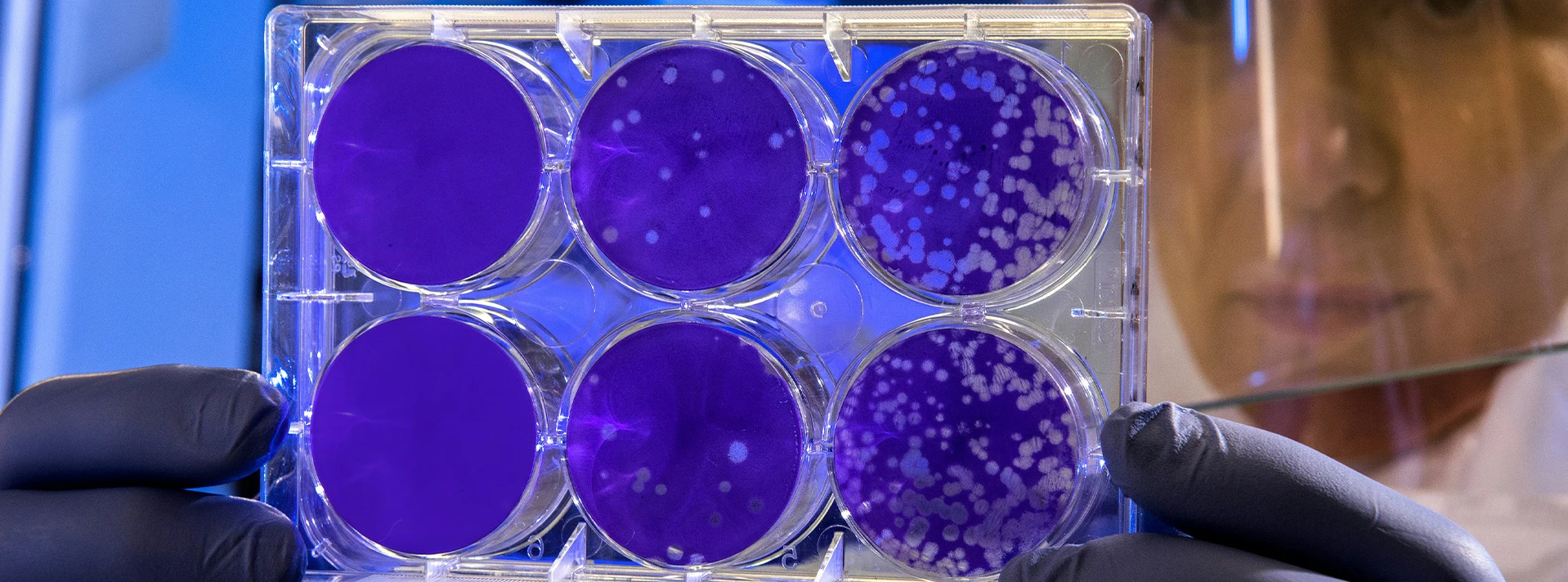
Discovering the invisible world that shapes life
Microbiology at Ludlow University explores the fascinating world of microorganisms - from bacteria and viruses to fungi and parasites - and their vital roles in health, disease and the environment. You’ll study how microbes function, evolve and interact with humans and ecosystems, while gaining the laboratory skills and scientific understanding to apply microbiology in research, medicine, and biotechnology.
Our courses combine molecular biology, immunology and environmental microbiology, preparing you to work at the cutting edge of scientific discovery. You’ll learn how to use microorganisms to solve global challenges, from fighting infections to developing sustainable technologies.
Hands-on laboratory learning
Develop essential microbiological techniques, including microscopy, culturing, staining and molecular analysis.
Understanding disease and health
Learn how microbes cause illness, support immunity and contribute to global health.
Environmental and applied microbiology
Investigate the roles of microbes in ecosystems, waste management and biotechnology.
Research-led and professional insight
Study alongside scientists conducting research in areas such as virology, antibiotic resistance and microbial ecology.
Collaboration and communication
Work with peers to analyse data, present results and build skills in scientific writing and teamwork.
What you’ll learn
Microbiology at Ludlow provides a detailed understanding of microorganisms and their impact on the world.
You’ll study:
- microbial physiology and biochemistry
- molecular biology and genetics
- immunology and infection science
- virology, bacteriology and mycology
- environmental and industrial microbiology
- research methods and data analysis
Learning takes place through lectures, practical laboratory sessions, workshops and research projects. Assessment includes lab reports, data interpretation, exams, group projects and an independent dissertation in your final year.
Life as a microbiology student
As a microbiology student at Ludlow, you’ll learn through a mix of theoretical teaching and extensive practical training. You’ll spend time in our modern bioscience laboratories, equipped for microbiological and molecular research, where you’ll use advanced instruments and analytical tools.
You’ll investigate how microorganisms contribute to everything from human health to environmental sustainability, taking part in experiments, group projects and research initiatives. Our academic staff are active researchers in fields such as infectious disease, biotechnology, and environmental microbiology, ensuring your learning reflects the latest developments in the discipline.
Fieldwork and research placements give you opportunities to apply your skills in clinical, environmental and industrial contexts — developing the technical ability and confidence to pursue your chosen career path.
Career paths
A degree in microbiology from Ludlow opens up a wide range of scientific and professional opportunities. Graduates go on to careers in medical and clinical laboratories, pharmaceuticals, biotechnology, environmental consultancy, and research.
Many continue into postgraduate study or professional training in microbiology, biomedical science, or public health. With a strong foundation in laboratory skills, data analysis and problem-solving, you’ll be prepared to contribute to tackling global challenges - from infectious disease and antimicrobial resistance to sustainability and food security.